8 Tips from a Professional Surgery Recoverer

87WSyMSm

As featured on curetoday.com

I’m becoming a professional surgery recoverer. It seems like for the last three autumns, I’ve had surgery and spend the season looking at the leaves change through a hospital window or on my slow, prescribed daily walks. I recently read in each person’s life, they will start over many times and I believe whoever came up with this probably had several surgeries.

In my previous life before cancer, I was a marathoner, triathlete and was always trying to push myself to the next level. Going from running 26.2 miles to not being able to walk down a hallway has been a humbling experience.

In September 2014, I had a distal pancreatomy and splenectomy to remove a tumor on my pancreas. In October 2015, I had a liver resection and cholecystectomy to remove tumors in my liver. Then this October was the surprise surgery – a bowel obstruction, which is considered a complication from my liver operation. Something about the body not liking open spaces and my small intestine moving into that space.

Strangely and fortunately, my body seems to recover quite well from these surgeries. Youth and being physically fit are on my side, but I believe more so, it’s the determination and figurative steps I take after each procedure. So, here are a few tips from a professional recoverer on abdominal surgery.

  1. Ask a thousand preoperative questions. What can I expect from my incision? What kind of physical difficulties do patients experience? What should I expect when I wake up? Will there be drains, IVs, tubes? What will we do to manage pain? Will I be closed up with staples or glue? In my experience, surgeries are so routine for surgeons they don’t realize we don’t know these things. Waking up with an unexpected tube up your nose or a larger incision than you thought can be upsetting. Therefore, ask every question that comes to mind. I’ve found connecting with others who have been through the surgery to gather questions can be helpful too.
  2. Lean on your nurses. Can we just take a moment to recognize the awesomeness of nurses? They are the foot soldiers and we and doctors could not do it without them. Most nurses will go to bat for you. If something isn’t working, ask them to advocate to the doctors on your behalf or ask what they recommend. After my first surgery, a nurse recommended a trapeze when I expressed how hard it was getting in and out of bed after having my abdominal muscles cut through.
  3. Walk…..a lot. This is a tough one, but critical on getting yourself discharged. Set some goals. The day after surgery my goal was to walk to the end of the hall and back three times throughout the day. I only made it twice, but the next day I did it four times. I’ve found activity trackers are helpful. I’d set an alarm and try to do a bit more each day. Also, walking is useful in getting your digestive system moving when it’s been put to sleep by pain meds, anaesthesia, surgery and the change in diet.
  4. At Home.  Being confined to a hospital room makes me crazy.  I know I’m not alone when I say how wonderful it is to get home after a stay.  However,  coming home presents a new set of challenges. After getting used to a moveable hospital bed, my stationary bed was tricky. I actually found the couch to be more comfortable. Some people find it easier to sleep in a recliner or gravity chair. Also, if you’ve been sent home with drains, my thoughts are with you. They are annoying. I always safety pinned them to my shirt. Recently, a friend and breast cancer survivor shared a zip up hoody with interior drain pockets. What a revolutionary idea. If something is bothering you at home, don’t just accept it, a quick Google search or call to a nurse could change your world.
  5. Keep walking….a lot.  Your walks are not over now you’ve left the hospital. In fact, this is where you really need to increase your daily steps, endurance and strength now you’re no longer confined to a hallway. Again, the activity tracker is great. The day I came home from the hospital, my goal was to do 1,000 steps. The next day, I went to 1,500. Some days it would take me several outings. A month from surgery, I finally made it to 10,000 steps. Now, I’m working on increasing my endurance by walking for longer stretches of time.
  6. Don’t ignore the mental and emotional.  This is also a hard one. After every procedure, I find myself struggling to regain my ingrained positive attitude. I’ve come to realize a pattern of PTSD (post traumatic stress disorder) after I come home from a surgery. Recognizing this, I’m sure to combat it with extra sessions with my therapist, making plans with friends and planning daily trips out of the house. It’s easy to stay in a mental slump when you’re alone and confined all day, so as painful as it might be, just do don’t do it.
  7. Go to physical therapy. I feel doctors don’t recommend this enough. I went to PT after my first surgery and recovered fast. With my second, I decided to forgo physical therapy. Months post op, I wasn’t as strong and my endurance was nonexistent. I finally submitted to PT and within a few weeks I was back on track. This go around, I cringe at the idea of spending so much time at the therapist’s office, but know it’s the way back. This is also the safest way to regain strength. Attempting on your own could result in hurting yourself with a hernia and what you don’t need after surgery is another surgery. Thanks to physical therapy, 6 months after I completed treatment, I hiked 250 miles across Spain with a backpack. If that’s not a testimonial, I don’t know what is.
  8. Practice gratitude, patience and mindfulness. No matter how major or minor the operation, I notice how much quicker I recover when I give myself a break.  I do this by mentally listing ten things I’m grateful for each day.

So, here I am, a couple months post-op and doing pretty good. I walk for an hour everyday and start physical therapy in the new year. After I get the green light from my therapist, I plan to work my way back up to daily yoga and sign up for a half marathon in the spring. There are survivors out there defying the odds by running marathons, completing ironmans, climbing mountains and biking across countries. These acts inspire people and are proof our bodies are capable of much more than we can even imagine. I’d rather strive to be these people than submit to cancers quest to stop me.

Read all my articles from Cure

Review: When Breath Becomes Air

87WSyMSm

As featured on curetoday.com

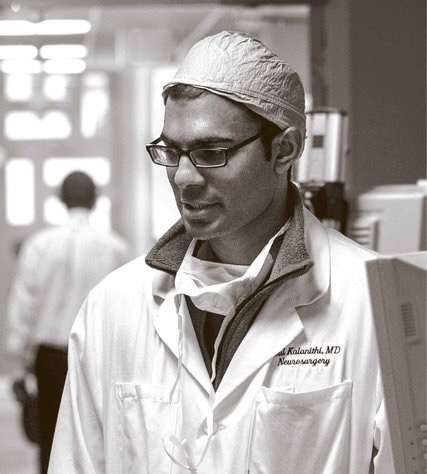
Over the summer, a friend asked if I read, Dr. Paul Kalanithi’s memoir, “When Breath Becomes Air”. I had not, but look it up and was immediately flooded with anxiety. A 35-year-old neurosurgeon diagnosed with advanced stage lung cancer’s thoughts on life and dying. Deciding the book was to close to home,  I added it to my list of 2017 fear conquering goals. Only the book wouldn’t go away and appeared on my Amazon recommendations and in the front section of every bookstore I entered. I concided and purchased it because I felt like the universe was telling me to I needed to read this book and I’m glad I did.

img_2308Before getting into the major takeaways, it should be acknowledged from a writing standpoint, Dr. Kalanithi “spun gold”. He strung his story together with complexity, elegance and creativity and it’s no doubt he found his true callings by being both a writer and a doctor.     
In terms of his disease, I feel being a physician was a blessing and a curse. Obviously, he was knowledgeable to the medical and scientific aspects, often to a fault.

“I began to suspect that being so close to the fiery light of such moments only blinded me to their nature.” He knew enough to ask his oncologist the Kaplan-Meier survival rates and his oncologist knew enough not to answer, but that he would look them up on his own.  Eventually, Kalanithi realized, “detailed statistics are made for research halls, not hospital rooms,” a philosophy I wished more doctors adopted.

At the debut of his illness he appeared to struggle and eventually come to grips with the emotional, mental and spiritual aspects of disease.  I’ve come to learn these are some of the biggest oversights by our doctors. Call me naive, but I’m a firm believer in positivity and faith and I think Dr. Kalanithi discounted these aspects early on, but eventually confronted them, when he said, “Science may provide the most useful way to organize empirical, reproducible data, but its power to do so is predicted on it’s inability to grasp the most central aspects of human life: hope, fear, love, hate, beauty, envy, honor, weakness, striving, suffering, virtue.

Between these core passions and scientific theory, there will always be a gap. No system of thought can contain the fullness of the human experience.”

I think “When Breath Becomes Air” should be annual reading for doctors if only to have both a peer’s and patient’s insight into illness.  Dr. Kalanithi explained,“How little do doctors understand the hells through which we put patients.” Also, to reaffirm, “Doctors invade the body in every way imaginable. They see people at their most vulnerable, their most scared, their most private. They escort them into the world, and then back out. Seeing the body as matter and mechanism is the flip side to easing the most profound human suffering.”

Throughout the book, there were many relatable moments. Early on when Dr. Kalanithi said, “Severe illness wasn’t life-altering, it was life-shattering,” and “Even when the cancer was in retreat, it cast long shadows.” And the most relatable theme for me personally – the biggest fear not being death, but leaving a spouse alone and “promising her one life and giving her another.”

Unfortunately, Paul Kalanithi passed away while writing this book, but in my eyes, it’s actually quite complete. His widow wrote the epilogue and beautifully summarized their journey through illness, “Although these last few years have been wrenching and difficult-sometimes almost impossible-they have also been the most beautiful and profound of my life, requiring the daily act of holding life and death, joy and pain in balance and exploring new depths of gratitude and love.”

Now, if you haven’t read, “When Breath Becomes Air”, go out and buy two copies – one for you and one for your oncologist.

Read all of my articles with Cure.

Paul Kalanithi (1977-2015)

Cancer Camp

87WSyMSm

As featured on curetoday.com

During treatment, a fellow survivor friend raved about her experience with an organization called, First Descents (FD). FD is a nonprofit that takes young adult cancer survivors on free adventure trips. Yes, yes and yes. I liked them on Facebook, signed up for their newsletter and went on with the business of getting well.

After surgery and completing chemotherapy, I started to feel more like my adventurous self again. Also around this time, I received an email about First Descents 2016 programs which included rock climbing, whitewater kayaking and surfing at various locations throughout the United States. All of them sounded like fun, but I chose surfing in Santa Cruz, California. I’d never surfed before, but have tremendous respect for the sport. I’d equate watching surfers to watching fire – mesmerizing. The intuition to read the ocean, defy the odds of a wave and staying calm during an inevitable wipe out are all impressive and admirable qualities. Surfing and cancer don’t sound so different.

img_1865

Stunning Pigeon Point Lighthouse (and where we stayed for the week)

Arriving at the San Jose International Airport, I was immediately spotted by the other campers. The short hair and baseball hats are usually dead giveaways for us women cancer survivors. After a curvy drive over the coastal mountains, we arrived at our home for the next week – Pigeon Point Lighthouse on the Pacific Coast Highway. It was a stunning location.

img_2280

Cowell’s Beach in Santa Cruz

The next day, we arrived at Cowell’s Beach in Santa Cruz and were lead by Richard Schmidt’s Surf School. Little did we know then what a legend Richard Schmidt is in the surfing community. Surf Splendor Podcast even called his school, “the oldest and most prominent in the world.” Richard and his instructors were extremely kind, humble, encouraging and considerate to our motley crew and we all felt honored to be taught by masters. Once we got our wetsuits on and a beach quick lesson, we were let loose in the water. The first day, I struggled and never got up on my board. Surfing is hard for a strong, fit person, but it’s even harder when you’ve been taken apart and pieced back together by surgeons like many of us had been. We all kept at it and to my surprise, the next day and the rest of the week, most of us were able to get up and ride some pretty sick waves, as they say. A day of surfing was reminiscent of how you feel as a child after a day of swimming – happy, satisfied, starving and exhausted.

Some of my favorite moments throughout the week had nothing to do with surfing, but from being in a group where I could joke about cancer. This is not something I’m able to do too much in my regular life because it’s usually met with a stern “not funny” look from my husband or other family members. We all cracked up when someone made an origami fortune teller and joked that’s what doctors use to determine the number of rounds of radiation and chemotherapy. Or demanding to see a port scar as a means of entry into our living area. Laughing about having cancer flare-ups to protesting something we were about to do. Joking that if you put all our body parts together, we made up a whole person. How refreshing it is to be in the company of people who could actually understand these types of morbid jokes and genuinely laugh with you.

img_1955

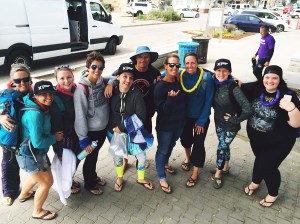
The ladies with Richard Schmidt

Another powerful moment was when us girls stood in the living room revealing our scars. Mine have never been seen by anyone other than my husband and medical staff, so this was pretty big. I saw many nipple-less breasts and they saw my ginormous abdominal scar, which is the shape of a Mercedes-Benz logo (the actual surgical incision name). It was a liberating moment and I would’ve never done this with any of my non-cancer friends.

I’ll remember this experience and the stories of my brother and sister cancer fighters forever. First Descent’s motto is “out living it.” We had all been through so much, but were still here, out living what has killed others, together, in more ways than one and that was pretty rad, as they say.

“Life should not be a journey to the grave with the intention of arriving safely in a pretty and well preserved body, but rather to skid in broadside in a cloud of smoke, thoroughly used up, totally worn out, and loudly proclaiming ‘Wow! What a ride'” – Hunter S. Thompson

To learn more about First Descents, check out their website at www.firstdescents.org

Read this on curetoday.comCancer Camp

Read all my articles with Cure.

img_2279

The “Minimavs” Team