Cancer Book Club & Other Favorite Reads

One of my New Year’s resolutions was to break my technology addiction and my first course of action was banning devices from my bedroom. Instead of watching something on my iPad as I fall asleep, I replaced the activity with reading (real books) and have never felt more well rested, energetic and sharp. It’s made me realized how much I’ve missed reading like I did when I was younger. Plus, I’ve read over 45 books this year!

Naturally, some of these books are about cancer.  They consist of either memoirs or “how-to’s” on surviving. Below you’ll find a random, incomplete list my favorites to-date to serve as suggestions if you’re looking for inspiration.
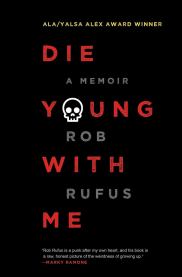
rufusDie Young With Me by Rob Rufus. Read this if you’re a young adult impacted by cancer, lover of punk music and/or don’t subscribe to the kumbaya-ness that often accompanies illness. Personally, I’m a little partial to this story since Rufus and I both live in Nashville and are cancer surviving writers, who aren’t afraid of a few f-bombs.

When Breath Becomes Air by Paul Kalanthi. It’s sad, it’s profound, but most of all, it’s beautifully written. Read my complete review here.

Dying to Be Me by Anita Moorjani. Read this book if you believe in miracles or want to believe in miracles by a first hand experience.

radzwillWhat Remains by Carole Radzwill. Another weeper, but the prose is incredible. I found this memoir of loss an example of what our caregivers endure along our side because they are often the forgotten trauma survivors.

Crazy Sexy Cancer by Kris Carr. Read this if you are a newly diagnosed woman and/or interested in means of healing through food, alternative treatments, etc. Better yet, watch the documentary or an episode of Carr on Super Soul Sunday.  

41b5V0a3aFL._SX326_BO1,204,203,200_I Have Cancer and Never Felt Better by Tracy Krulik. Check this out if you’re a fellow pNET, especially if you’re about to go into surgery. I devoured this before my distal pancreatomy and it provided me with many important questions I would have not otherwise asked.

Now, this all being said, I have set up some rules for cancer reading, which may not always be a relaxing escape.

  1. Memoirs only before bed. Rule 1a – the person has to be alive. Rule 1b – it can’t be a section where the subject is talking about a similar trauma (chemo, nausea, etc.) Bringing those feelings and memories to the surface have no place in my bedroom.
  2. No cancer reads on vacation. Time away is officially a cancer-free zone in my family.

Don’t want to read about cancer? Yeah, me neither. Here are a few of my favorites:

The Namesake by Jhumpa Lahiri. This is my all-time favorite book, ever. The prose is out of this world and tells the story of an immigrant family’s struggle of retaining their culture versus assimilating to America. If you like this book, Lahiri’s Interpreter of Maladies is also worth the time. It was Lahiri’s first book and won the Pulitzer Prize if you needed any further nudging. There’s also a movie based on The Namesake, which, for the first time ever, does justice to the book.

The Moth Presents all These Wonders: True Stories About Facing the Unknown. Read my complete review here. Okay, so there are a few stories about cancer, but they are happy ones.
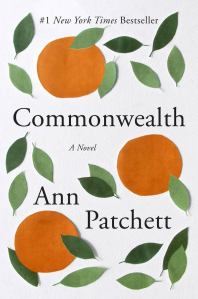
patchettCommonwealth by Ann Patchett. God, I love Ann Patchett. She lives in Nashville and owns a bookstore I frequent. Between you and I, I sometimes hang out there just to catch a glimpse of her. I wouldn’t be surprised if she thinks I’m a stalker. I just kind of want to soak up some of her genius by breathing the same air.

Hillbilly Elegy by J.D. Vance. An interesting memoir of escaping and growing up in poor Appalachia.

Behold the Dreamers by Imbolo Mbue. A novel an African immigrant family trying to make it in New York City. While this story is fiction, I think it portrays the sacrifices and lengths that foreigners will go to to achieve the American Dream.

If you’re looking for more suggestions, check out my Goodread’s list, which has the last few years of books with ratings.

Also, my “to-read” list is primarily comprised of recommendations from others, so if you have a book that’s touched your life, please share by commenting below.

Up next in the cancer category is Radical Remission by Kelly Turner, Everyday I Fight by Stewart Scott, A Walk with Purpose by Michael Becker and The Art of Not Giving a Fuck by Sarah Knight.

Happy Reading!

Pausing, Slowing Down & Reducing the Noise

87WSyMSm

As featured on curetoday.com

In his book “Information Anxiety” (1989), Richard Wurman claims that the weekday edition of The New York Times contains more information than the average person in 17th-century England was likely to come across in a lifetime. I am curious how that statement would change given the speed of information and life in 2017. Of course, I am so grateful for the significant impact this surge of information has created in the cancer world. However, the biggest downside of the increased velocity is a world with so much noise.  Add cancer to this equation and it’s no wonder anxiety accompanies the disease.

Gandhi said, “There’s more to life than increasing it’s speed,” and it took a cancer diagnosis in September 2014 for me to understand the meaning of this quote. Information overload and busyness has become a chronic disease in our society. It seems as though everyone wants to move through life as fast as possible and news pours on us before we can formulate our own thoughts. I think it’s quite sad. None of us will be on our deathbed wishing we moved through this world more rapidly. Everybody and everything wants our time and attention, which are two of the most precious commodities for a cancer survivor.

Illness did not just force me to slow down – there was a chunk of time where it pretty much stopped me in my tracks. I went from endurance athlete to bed ridden in a matter of months, which was humbling and an experience filled with valuable lessons. As a result, I learned that the slower I go, the more I can actually accomplish well. Slowing down allows me to live with quality, in the moment.  And most importantly, decreasing my pace has made me acutely aware of the outside noise that distracts us from the life’s most important things, which aren’t things at all. They are our relationships and health.

I am very fortunate that I did not have (or want) to jump back into a busy life after going through active treatment. My life gives me the option to say, “no,” which I do often. When I’m in a particularly noisy period, I don’t just slow down the intake of information and activities, but do my best to pause all together in order to put all my time and attention into my personal self-care. I give myself the time and space to do my favorite things which include writing, yoga, reading, sleeping 8-9 hours, taking naps, meditating daily, writing my prayer and gratitude list, taking walks (gasp) without a device and reduce my time on the internet.

Whether you’re a cancer survivor or not, EVERYONE could benefit from slowing down, pausing and reducing the noise to enjoy the only guarantee any of us have, which is the present moment we are in.

Read all my articles with Cure.

The Power of Words

outlivingit

As featured on First Descent’s Outliving It http://outlivingit.com

 “Sticks and stones may break your bones, but words will never hurt you,” was a phrase uttered in my household growing up. This was usually preceded by an insult or verbal nastiness from a cousin or sibling. With all due respect to the adults who doled out this prescription…Worst. Advice. Ever.

Words do hurt and have the power to evoke the strongest emotions. Chances are, if you’re reading this, cancer has been one of the most powerful, painful, transformative, definitive words of your life. It’s a word that takes less than a couple seconds to say, but it’s effects permeate a lifetime.

Through personal trial and error, I’ve found that after spending some time thinking about the vocabulary, it is possible to transfer some of the control from cancer to myself, which is a welcomed feeling considering how powerless cancer makes me feel. I’ve also learned that the vocabulary is different from person to person. If you’re not sure where to start, below are a few of the guidelines I’ve created for myself when talking cancer. Hopefully some of these will get you inspired to create your own list.

I have chosen to not to claim cancer. Don’t want it. Never have. Never will. Therefore, it’s not “my” cancer, but “the” cancer. “I don’t have cancer,” but “there is cancer inside my body.” Sure, it’s a play on words, but this is how I make sure cancer knows it will never be mine no matter how hard it tries. Like, ever. Also, something about the word “patient” makes me feel helpless, which is why I refer to myself as a “survivor”, which makes me feel powerful.  This is a label I attached to myself the day I was diagnosed and not the day I heard, “no evidence of disease.” There are many definitions to “survivor” but it’s pure context is, “to endure or live through (an affliction, adversity, misery, etc.)” so I am surviving no matter my current medical status.

One of the many things cancer has taught me is that most people do not know how to respond when I tell them how it has impacted my life. I can easily predict the deer in headlights look as the person searches for the right words. Naturally, they respond with a cliched, pre-packaged, canned and sometimes offensive response. I totally get it. I used to be this person. I still am this person sometimes. Cancer is so awkward and uncomfortable. However, what I have found useful is to tell my friends and family what’s up, ahead of time, if possible, through an email message, so they have time to process and formulate a response.  In addition, I’ve also found it helpful to tell them what they can say to encourage and support me. Doing this has made it easier on both of us. Our friends and family want to be a source of encouragement and support and it’s unreasonable that we expect them to say the right thing when they have no idea what we need or want to hear. Here’s a couple suggestions I’ve used in the past:

Instead of saying, “I’m so sorry you’re going through this,” I ask that they say,  “I know you have the strength to get through this,” because I do. The former invokes feelings of pity, while the latter makes me feel strong and supported. I also asked for my supporters not use battle language or tell me to beat it, stay strong or positive. My feeling towards these phrases is that they imply if I just try a little harder, then I will be healed. Being the recipient of these words only invokes feelings of guilt if I don’t beat it or have the inevitable and normal periods of weakness or negativity. Cancer is not a matter of trying hard enough. And when all else fails, I enjoy the honest simplicity of, “I don’t know what to say.”

And for the love of all that is holy and sacred in this world, please, I beg of you, to not saying that someone, “lost the battle” if they pass away. We don’t describe death from heart disease, freak accidents, natural causes etc. in this manner. Using this phrase implies if the person only fought harder, they would have not died.  Loser’s lose which is the exact opposite word I would use to describe someone who’s been through cancer treatments. Those impacted by cancer endure surgeries, toxic chemicals, crazy side effects – cancer survivors are hard core, bad-asses. The strongest of the strong. Not defeated losers. In fact, in the Sorcerer’s Stone, Dumbledore wisely says, “Death is but the next great adventure,” which seems like a fitting description for those in the First Descents tribe, who have passed on.

Again, these are the terms that work for me. Just like every cancer is different, the words we find comfort and power in will be different. I encourage you to spend some time thinking about your vocabulary and once you’ve built your dictionary,  tell your support team.

This blog was featured on First Descent’s Blog, www.outlivingit.com. First Descent’s is a non-profit that offers young adult cancer survivors (FREE) adventure trips where they learn the healing power of community and nature through participating in activities such as kayaking, rock climbing and surfing. In September 2016, I attended a First Descents Surf Program in Santa Cruz, California. Read about that here.