
As featured on curetoday.com
I’m becoming a professional surgery recoverer. It seems like for the last three autumns, I’ve had surgery and spend the season looking at the leaves change through a hospital window or on my slow, prescribed daily walks. I recently read in each person’s life, they will start over many times and I believe whoever came up with this probably had several surgeries.
In my previous life before cancer, I was a marathoner, triathlete and was always trying to push myself to the next level. Going from running 26.2 miles to not being able to walk down a hallway has been a humbling experience.
In September 2014, I had a distal pancreatomy and splenectomy to remove a tumor on my pancreas. In October 2015, I had a liver resection and cholecystectomy to remove tumors in my liver. Then this October was the surprise surgery – a bowel obstruction, which is considered a complication from my liver operation. Something about the body not liking open spaces and my small intestine moving into that space.
Strangely and fortunately, my body seems to recover quite well from these surgeries. Youth and being physically fit are on my side, but I believe more so, it’s the determination and figurative steps I take after each procedure. So, here are a few tips from a professional recoverer on abdominal surgery.
- Ask a thousand preoperative questions. What can I expect from my incision? What kind of physical difficulties do patients experience? What should I expect when I wake up? Will there be drains, IVs, tubes? What will we do to manage pain? Will I be closed up with staples or glue? In my experience, surgeries are so routine for surgeons they don’t realize we don’t know these things. Waking up with an unexpected tube up your nose or a larger incision than you thought can be upsetting. Therefore, ask every question that comes to mind. I’ve found connecting with others who have been through the surgery to gather questions can be helpful too.
- Lean on your nurses. Can we just take a moment to recognize the awesomeness of nurses? They are the foot soldiers and we and doctors could not do it without them. Most nurses will go to bat for you. If something isn’t working, ask them to advocate to the doctors on your behalf or ask what they recommend. After my first surgery, a nurse recommended a trapeze when I expressed how hard it was getting in and out of bed after having my abdominal muscles cut through.
- Walk…..a lot. This is a tough one, but critical on getting yourself discharged. Set some goals. The day after surgery my goal was to walk to the end of the hall and back three times throughout the day. I only made it twice, but the next day I did it four times. I’ve found activity trackers are helpful. I’d set an alarm and try to do a bit more each day. Also, walking is useful in getting your digestive system moving when it’s been put to sleep by pain meds, anaesthesia, surgery and the change in diet.
- At Home. Being confined to a hospital room makes me crazy. I know I’m not alone when I say how wonderful it is to get home after a stay. However, coming home presents a new set of challenges. After getting used to a moveable hospital bed, my stationary bed was tricky. I actually found the couch to be more comfortable. Some people find it easier to sleep in a recliner or gravity chair. Also, if you’ve been sent home with drains, my thoughts are with you. They are annoying. I always safety pinned them to my shirt. Recently, a friend and breast cancer survivor shared a zip up hoody with interior drain pockets. What a revolutionary idea. If something is bothering you at home, don’t just accept it, a quick Google search or call to a nurse could change your world.
- Keep walking….a lot. Your walks are not over now you’ve left the hospital. In fact, this is where you really need to increase your daily steps, endurance and strength now you’re no longer confined to a hallway. Again, the activity tracker is great. The day I came home from the hospital, my goal was to do 1,000 steps. The next day, I went to 1,500. Some days it would take me several outings. A month from surgery, I finally made it to 10,000 steps. Now, I’m working on increasing my endurance by walking for longer stretches of time.
- Don’t ignore the mental and emotional. This is also a hard one. After every procedure, I find myself struggling to regain my ingrained positive attitude. I’ve come to realize a pattern of PTSD (post traumatic stress disorder) after I come home from a surgery. Recognizing this, I’m sure to combat it with extra sessions with my therapist, making plans with friends and planning daily trips out of the house. It’s easy to stay in a mental slump when you’re alone and confined all day, so as painful as it might be, just do don’t do it.
- Go to physical therapy. I feel doctors don’t recommend this enough. I went to PT after my first surgery and recovered fast. With my second, I decided to forgo physical therapy. Months post op, I wasn’t as strong and my endurance was nonexistent. I finally submitted to PT and within a few weeks I was back on track. This go around, I cringe at the idea of spending so much time at the therapist’s office, but know it’s the way back. This is also the safest way to regain strength. Attempting on your own could result in hurting yourself with a hernia and what you don’t need after surgery is another surgery. Thanks to physical therapy, 6 months after I completed treatment, I hiked 250 miles across Spain with a backpack. If that’s not a testimonial, I don’t know what is.
- Practice gratitude, patience and mindfulness. No matter how major or minor the operation, I notice how much quicker I recover when I give myself a break. I do this by mentally listing ten things I’m grateful for each day.
So, here I am, a couple months post-op and doing pretty good. I walk for an hour everyday and start physical therapy in the new year. After I get the green light from my therapist, I plan to work my way back up to daily yoga and sign up for a half marathon in the spring. There are survivors out there defying the odds by running marathons, completing ironmans, climbing mountains and biking across countries. These acts inspire people and are proof our bodies are capable of much more than we can even imagine. I’d rather strive to be these people than submit to cancers quest to stop me.


 Before getting into the major takeaways, it should be acknowledged from a writing standpoint, Dr. Kalanithi “spun gold”. He strung his story together with complexity, elegance and creativity and it’s no doubt he found his true callings by being both a writer and a doctor.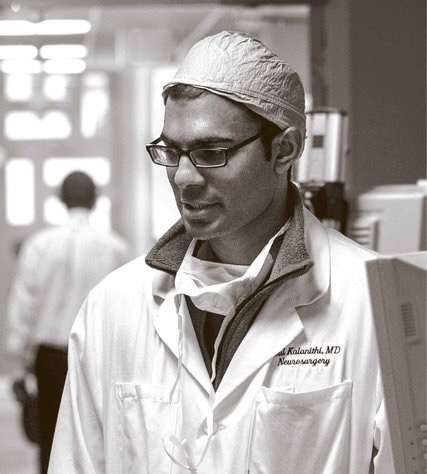
 Stacie Chevrier