Cancer Book Club & Other Favorite Reads

One of my New Year’s resolutions was to break my technology addiction and my first course of action was banning devices from my bedroom. Instead of watching something on my iPad as I fall asleep, I replaced the activity with reading (real books) and have never felt more well rested, energetic and sharp. It’s made me realized how much I’ve missed reading like I did when I was younger. Plus, I’ve read over 45 books this year!

Naturally, some of these books are about cancer.  They consist of either memoirs or “how-to’s” on surviving. Below you’ll find a random, incomplete list my favorites to-date to serve as suggestions if you’re looking for inspiration.
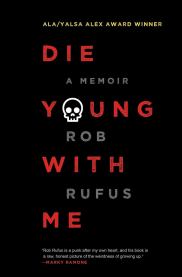
rufusDie Young With Me by Rob Rufus. Read this if you’re a young adult impacted by cancer, lover of punk music and/or don’t subscribe to the kumbaya-ness that often accompanies illness. Personally, I’m a little partial to this story since Rufus and I both live in Nashville and are cancer surviving writers, who aren’t afraid of a few f-bombs.

When Breath Becomes Air by Paul Kalanthi. It’s sad, it’s profound, but most of all, it’s beautifully written. Read my complete review here.

Dying to Be Me by Anita Moorjani. Read this book if you believe in miracles or want to believe in miracles by a first hand experience.

radzwillWhat Remains by Carole Radzwill. Another weeper, but the prose is incredible. I found this memoir of loss an example of what our caregivers endure along our side because they are often the forgotten trauma survivors.

Crazy Sexy Cancer by Kris Carr. Read this if you are a newly diagnosed woman and/or interested in means of healing through food, alternative treatments, etc. Better yet, watch the documentary or an episode of Carr on Super Soul Sunday.  

41b5V0a3aFL._SX326_BO1,204,203,200_I Have Cancer and Never Felt Better by Tracy Krulik. Check this out if you’re a fellow pNET, especially if you’re about to go into surgery. I devoured this before my distal pancreatomy and it provided me with many important questions I would have not otherwise asked.

Now, this all being said, I have set up some rules for cancer reading, which may not always be a relaxing escape.

  1. Memoirs only before bed. Rule 1a – the person has to be alive. Rule 1b – it can’t be a section where the subject is talking about a similar trauma (chemo, nausea, etc.) Bringing those feelings and memories to the surface have no place in my bedroom.
  2. No cancer reads on vacation. Time away is officially a cancer-free zone in my family.

Don’t want to read about cancer? Yeah, me neither. Here are a few of my favorites:

The Namesake by Jhumpa Lahiri. This is my all-time favorite book, ever. The prose is out of this world and tells the story of an immigrant family’s struggle of retaining their culture versus assimilating to America. If you like this book, Lahiri’s Interpreter of Maladies is also worth the time. It was Lahiri’s first book and won the Pulitzer Prize if you needed any further nudging. There’s also a movie based on The Namesake, which, for the first time ever, does justice to the book.

The Moth Presents all These Wonders: True Stories About Facing the Unknown. Read my complete review here. Okay, so there are a few stories about cancer, but they are happy ones.
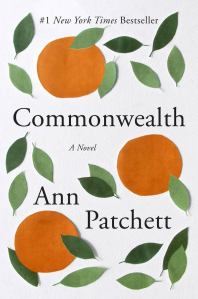
patchettCommonwealth by Ann Patchett. God, I love Ann Patchett. She lives in Nashville and owns a bookstore I frequent. Between you and I, I sometimes hang out there just to catch a glimpse of her. I wouldn’t be surprised if she thinks I’m a stalker. I just kind of want to soak up some of her genius by breathing the same air.

Hillbilly Elegy by J.D. Vance. An interesting memoir of escaping and growing up in poor Appalachia.

Behold the Dreamers by Imbolo Mbue. A novel an African immigrant family trying to make it in New York City. While this story is fiction, I think it portrays the sacrifices and lengths that foreigners will go to to achieve the American Dream.

If you’re looking for more suggestions, check out my Goodread’s list, which has the last few years of books with ratings.

Also, my “to-read” list is primarily comprised of recommendations from others, so if you have a book that’s touched your life, please share by commenting below.

Up next in the cancer category is Radical Remission by Kelly Turner, Everyday I Fight by Stewart Scott, A Walk with Purpose by Michael Becker and The Art of Not Giving a Fuck by Sarah Knight.

Happy Reading!
Things Are Not Always as They Appear


(Yes, I know it’s long, but I promise it will be worth your time)

I know…
…that surgery and scar on my belly.
…that uncertainty, wondering and wanting.
…that search for the expert and regular trip to New York City.
…that feeling of just not wanting to exist, but to live.
…that desire to have children and not being confident it will happen.
…how to say, fuck it, and keep going when people tell you to slow down.
…wanting to be normal, but also not wanting to be normal.
…the art of balancing cancer treatment and dream chasing.
…wanting to be anxious for something other than cancer.
…rare disease.
…the wait for more research and treatment options.
…getting through and not giving up.

Yes, I know I’m not Gabe or a runner of her caliber. Actually, I wouldn’t even call myself a runner anymore. I don’t personally know Gabe.  I don’t know exactly what she is going through.

But, I do know there is so much I can relate to in her story. And I know there are many out there who can relate. I applaud her openness when it would be so easy to go quietly into treatment. Instead she chose to share and I feel a little less alone and grateful for the stereotype she is shattering.

I also know if you passed her (or I) on the street, you might (incorrectly) assume we are healthy because we are young and fit. Then, once our truth was revealed, you might (incorrectly) assume we should be at home with a scarf covering a bald head, cup of tea in hand, while staring out a window.

Cancer’s teachings are infinite and this documentary of Gabe’s race reinforces a truth I know all to well.  Things are not always as they appear.


Gabe Grunewald is a professional runner and an adenoid cystic carcinoma survivor. Follow her on Twitter, Instagram her website.


And if you needed more evidence that things are not always as they appear:


7 Yoga Truths for Cancer & Life

Summertime will always put me in a reflective state. It seems to be my season of challenge, transition and transformation after being diagnosed with a Pancreatic Neuroendocrine Tumor in 2014.

This time last year, I was deep into my 30-day, 200 hour yoga teacher training “intensive”, which is the most accurate description of the experience. I have never pushed myself more physically, mentally, spiritually and emotionally. I cried therapeutic tears everyday and was surprised how much unresolved trauma I had stored in my body because of cancer. It was the best gift I have given myself and I graduated the program with so much more than a deeper understanding of the physical practice.

One of the many concepts that resonated with me during the 30 days was the Seven Axioms of Teacher Training. Over the last year, as I’ve continued to ride the rollercoaster of illness, these universal truths have been comforting reminders.

  1. You’re exactly where you’re suppose to be. This is a hard one to accept when an illness is involved. When I was sick, if someone said this to me, I probably would’ve punched them in the face, but now, I get it. I would give back cancer in a nano-second, but that means I would also have to give back the meaningful friendships I’ve created, the completion of the El Camino de Santiago, yoga teacher training, my career as a writer, my role at the FDA, my thirst for adventure, etcetera. All these wonderful things are a result of cancer. So, am I exactly where I’m suppose to be? Unfortunately and fortunately, yes.
  2. Fear and pain are life’s greatest teachers. Do I need to say anything more? I have learned so much from illness because it has brought on fear and pain I never realize existed and through that same fear and pain, I have learned how to live and not just exist. Cancer has taught me that I am so very strong, resilient and courageous, a word that makes me roll my eyes. I have been able to do things I never thought I’d be able to do because of cancer. For instance, before cancer I coward at the idea of needles. Now, I could give myself an injection while climbing a mountain at the same time. Cancer has also taught me deep compassion for my fellow humans. Others are often shocked when I tell them how the disease has impacted my life because I look like a normal, healthy, 37-year-old.  This is proof we never know what others have going on based on outward appearances and for that, I am kinder to people.
  3. Laughter and play are the fountains of youth. I find nothing fun about cancer. I often say it is the opposite of fun. But, I think within the non-fun, it is important to keep laughing and retain a childlike sense of play. In moments where it’s too hard to keep things light, call for backup. My husband is a major source of keeping me laughing and has succeed to make me smile in dark moments. When he’s not around, I watch YouTube and am surprised how much time I can spend watching puppy videos.
  4. Exercise and rest are the keys to vibrant health. We all know this, yet, so many of us ignore it. Before cancer, I exercised like crazy, at the expense of sleep. I believe, sleep deprivation was a contributing factor to my diagnosis. Now, I make sure I get at least eight hours and move my body every day. I wouldn’t describe myself as having vibrant health, but I would say I am more fit that the average person, which has been one of my secrets to managing a chronic illness.
  5. Touch and intimacy are basic human needs. We’ve all seen the study about babies who do not thrive when they are not touched and cuddled, yet, as we grow older, we assume that need dwindles. If you’re unwell, you should double-up the hugs and love.
  6. Everything is impermanent. For me, this is the most powerful axiom. It’s context is that everything is temporary. We all walk around with an illusion of control, which is not the case. When you look deeply, you will see that there are no guarantees. Health is temporary. Sickness is temporary. Happiness is temporary. Sadness is temporary. One of the reasons loss of anything is so hard to accept is because we do not expect change. We want our lives to continue on without any uncomfortable interruption. And when the interruption occurs, we are surprised and hurt. Accepting that everything is impermanent has given me great comfort. It has made the natural ups and downs easier to accept. And most important, it has taught me to live each day as if tomorrow is not guaranteed, because it is not.
  7. Everything is connected. I vividly remember the days and weeks after surgeries and chemotherapy concluded. I felt this euphoric connection to everyone and everything down to the core of my bones. Perhaps it was a high level of relief, trauma or PTSD, but I was so happy to be alive and enthralled with everything. I would go for a walk in my neighborhood and notice the tiniest, most beautiful things I never realized were there. I’d often come home with tears streaming down my face and my husband looking at me as if I’d lost my marbles. Everything seemed magical. While some of the feeling has faded, the memories remain evidence that we are all connected to everyone and everything whether we notice it or not.

Whether you are impacted by cancer, another illness or life challenge, I hope these axioms give you the same pause, solace and perspective they have for me.

Read all my articles with Cure.