PRRT Diary #2: Sailing

This news may be a re-run for those of you who read regularly, but it’s deja vu worthy – my insurance company paid the first claim on Peptide Receptor Radionuclide Therapy (PRRT)! And the heavens opened to reveal a chorus of angels singing hallelujah. Assuming Blue Cross Blue Shield of Michigan will continue to pay, the fact that we won’t go broke paying for cancer treatment is darn exciting.

I could hardly believe how quickly the time flew by between my first and second therapies. This is thanks to the wonderful busy-ness of summer which included a two week vacation with my in-laws from France where we visited New Orleans and the Alabama Gulf Coast. Unfortunately, my vacation was cut a few days short because I needed to get back home for blood work to clear me for the next round of PRRT. Honestly, I probably could have done it at a clinic near our vacation spot, but as I chronicled in my last PRRT diary entry – the coordinating is exhausting.

My labs revealed a 75% tumor marker reduction, good blood counts and a high functioning liver, even with cancer currently renting space. (Raises hand for virtual high-fives…)

To keep the flow of good news coming, I was (and am) feeling awesome. Other than the 10 days after PRRT #1, I am at the yoga studio and writing desk daily with my regular gallivants around town. Basically, cancer and PRRT have not slowed me down.

So, yeah, smoothing sailing into treatment number two and if you’re a sailor (I am not) you know how quick journeys can change – waves, wind, storms…hurricanes.

I’ve already detailed my indirect aches and pains due to Harvey and Irma, so I won’t recap, but you can catch up here and here.

I will take this opportunity to give props to the team at Excel Diagnostics for being at the top of their game in the middle of their own personal chaos. Those of you who deal with chronic illness know the how invaluable this is to have a committed, trustworthy team. (Fist bumps to Excel Diagnostics)

Hurricanes, reschedules and traveling aside, on Sunday, September 10th, Fabien and I left for Houston. Arriving early, we talked of big plans to be tourists in Houston when we landed only to find ourselves napping at the Residence Inn all afternoon. Meh, whatever.

Monday, it was back to reality. I woke up early, walked from the hotel to Excel for an MRI, Chest CT and Renal Scan. It’s a surprise how I could do these tests in my sleep now. Actually, I always ask – can I sleep? Years ago, I was a little ball of anxiety. Let’s just call that progress.

Tuesday was therapy day. I met with Dr. Armaghany in the morning for a quick check-up, who shared a general update that all tumors are stable. Three cheers! We then headed to the therapy room where my amino acids around noon, the Lutetium-177 around 12:45 and by 1:15 nausea arrived. It’s strange because nausea wasn’t as strong compared to the previous time, but I pretty much spent the afternoon vomiting. As soon as the amino acids stopped, I was starving, ready for a late lunch and a nap. All of which happened.

Wednesday, we arrived back at Excel for a follow-up scan, which revealed the uptake was good. Then we met with Dr. Ali, who shared the specifics of my results, which were a little better than what was alluded to the previous day. In summary, all tiny tumors are either stable, reduced or no longer visible. They were also very happy about the 75% decrease in my tumor marker and that my kidney functions have actually improved, which, they said, is weird.

With the good news in our pockets, we stopped for some tacos on our way to the airport and were relaxing in our pajamas at home by dinner time.

Thursday, I did wake up with some nausea which slowed me down. I passed the time by watching this hilarious show called, ‘How I Met Your Mother’ (RSVPing late to that party), getting 15 minute bursts of work done and eventually ralling to do some laundry and go to the grocery store. Riveting events for you the reader, I’m sure.

By Friday, I had only a tinge of nausea.

Saturday was the worst – I slept 14 hours, but managed to be awake for a wild Saturday night of folding laundry and making dinner. Sometimes it’s about little wins, people.

Monday, I went for my Lanreotide injection at the hospital. My appointment was at 8am, which had me cringing. When I woke up at 6am, I decided I was going to do what I want. I rolled into the hospital at 10am and was out the door by 11am. Proof that appointment times are total bullshit. The rest of the day, I felt pretty meh, but forced myself vertical to met friends for  dinner and the Depeche Mode concert.

After Monday, I was ready to rock and roll on my regular schedule again. High five for a faster recovery this round.

From a financial standpoint, we had to pay for the second therapy upfront. Talking with the coordinators at Excel, they will hold on to the first and second payments until the treatment is complete and my account is settled. It could take up to six months for reimbursement, which is kind of lame, in my opinion, but whatever. I’m happy to be discussing a reimbursement situation.

This trip was short and that worked for me. We stayed at the Marriott Residence Inn (Westchase) again and will continue to since it’s so convenient. We used their shuttle and Lyft to get around town and back and forth to the airport. If you’re a NET patient interested in the finances, please let me know and I’d be happy to share my spreadsheet with you.

Also, I did not take short acting Octreotide injections prior to treatment this time. I didn’t feel the need and decided I wanted the tumors thirsty.

My next therapy is scheduled for November 2nd and we’re going to visit Austin the weekend before. Send me your recommendations, people!


Pausing, Slowing Down & Reducing the Noise

87WSyMSm

As featured on curetoday.com

In his book “Information Anxiety” (1989), Richard Wurman claims that the weekday edition of The New York Times contains more information than the average person in 17th-century England was likely to come across in a lifetime. I am curious how that statement would change given the speed of information and life in 2017. Of course, I am so grateful for the significant impact this surge of information has created in the cancer world. However, the biggest downside of the increased velocity is a world with so much noise.  Add cancer to this equation and it’s no wonder anxiety accompanies the disease.

Gandhi said, “There’s more to life than increasing it’s speed,” and it took a cancer diagnosis in September 2014 for me to understand the meaning of this quote. Information overload and busyness has become a chronic disease in our society. It seems as though everyone wants to move through life as fast as possible and news pours on us before we can formulate our own thoughts. I think it’s quite sad. None of us will be on our deathbed wishing we moved through this world more rapidly. Everybody and everything wants our time and attention, which are two of the most precious commodities for a cancer survivor.

Illness did not just force me to slow down – there was a chunk of time where it pretty much stopped me in my tracks. I went from endurance athlete to bed ridden in a matter of months, which was humbling and an experience filled with valuable lessons. As a result, I learned that the slower I go, the more I can actually accomplish well. Slowing down allows me to live with quality, in the moment.  And most importantly, decreasing my pace has made me acutely aware of the outside noise that distracts us from the life’s most important things, which aren’t things at all. They are our relationships and health.

I am very fortunate that I did not have (or want) to jump back into a busy life after going through active treatment. My life gives me the option to say, “no,” which I do often. When I’m in a particularly noisy period, I don’t just slow down the intake of information and activities, but do my best to pause all together in order to put all my time and attention into my personal self-care. I give myself the time and space to do my favorite things which include writing, yoga, reading, sleeping 8-9 hours, taking naps, meditating daily, writing my prayer and gratitude list, taking walks (gasp) without a device and reduce my time on the internet.

Whether you’re a cancer survivor or not, EVERYONE could benefit from slowing down, pausing and reducing the noise to enjoy the only guarantee any of us have, which is the present moment we are in.

Read all my articles with Cure.

Nerding Out on NETs in NYC

img_3647

Me with the Godfather

My six month check-up with my Neuroendocrine Tumor (NET) specialist, Dr. Wolin, in New York City happened to coincide with Big Apple NETs support group Luncheon with the Experts.

As always, it was wonderful to connect with other NET survivors and hear their stories. However, being able to ask questions of some of our communities champions, was pretty incredible. The most notable of the panelists was Dr. Richard Warner, who I’m calling the Godfather of NETs. He was accompanied by two knowledgeable colleagues, Dr. Lynn Ratnor and Dr. Jerome Zacks. During lunch patients were allowed to ask general questions regarding treatments, surgery and lifestyle. Some of the major topics included:

Familial links – This was an especially timely topic for me as I just had an email conversation with a NET survivor, whose sibling also had a NET. Everything I’ve ever read indicates it is not a hereditary disease and Dr. Warner’s opinion is that there are links. He thinks this will be a hot topic in coming years as the incident rates rise for NETs. Then this week, the Healing NET released some information on a clinical trial looking for enrollees on this topic.

Diet and Alternative Treatments – The general consensus of the panelists was that these methods should not be used alone, but in conjunction with treatments. And that patients should be cautious to not negatively impact any proven treatments. Dr. Warner did share some of his opinions regarding foods (and other things) that impact carcinoid syndrome:

  • Nasal spray
  • Dental shots with epinephrine
  • Alcohol (Specifically port wine was mentioned)
  • Fermented foods such as ripe cheeses, herring, etc.

Note: I’m sure this list should be longer, but these are the items he mentioned.

There was also discussion about products such as CBD oil, alkaline water, plant based diets and excluding sugar. Being the scientists that they are, they would not stand behind anything that hasn’t been studied and proven.

Gallium-68 – There was some discussion and explaination about this newly approved scan and it’s ability to detect small tumors often undetectable by CTs and MRIs. The Carcinoid Cancer Foundation has put together a nice page of information and locations where this is available.

Xermelo – A newly approved drug to be used in conjunction with Lanreotide or Sandostatin for uncontrolled carcinoid syndrome. Read the FDA approval here.

It was a really nice few hours and I did learn some new things.

Then Monday, I had my very first Gallium-68 scan at Albert Einstein-Montefiore Cancer Center and wanted to chronicle the process for others.

Setting up the scan wasn’t too complicated. The most unnerving part was when I was told I’d have to pay upfront for the test and they would reimburse when/if my insurance covered the scan. Fortunately, my insurance came through at the last minute and I did not have to cough up $3,400. Can we all just pause for a moment and say, Thank You to the Insurance Gods.

I received several calls ahead of time cautioning me this is an extreme fast for four hours. Normally, I fast for six, so four is a walk in the park. After my Uber dropped me off at the wrong address, in the Bronx, in the rain, I eventually figured it out and made it just in time to my appointment.

I was called back right away for them to start an IV, which is always a fun process for me since I’m hard stick. Normally, the average number of sticks is four and they did it in three, so that’s pretty good.

img_3657

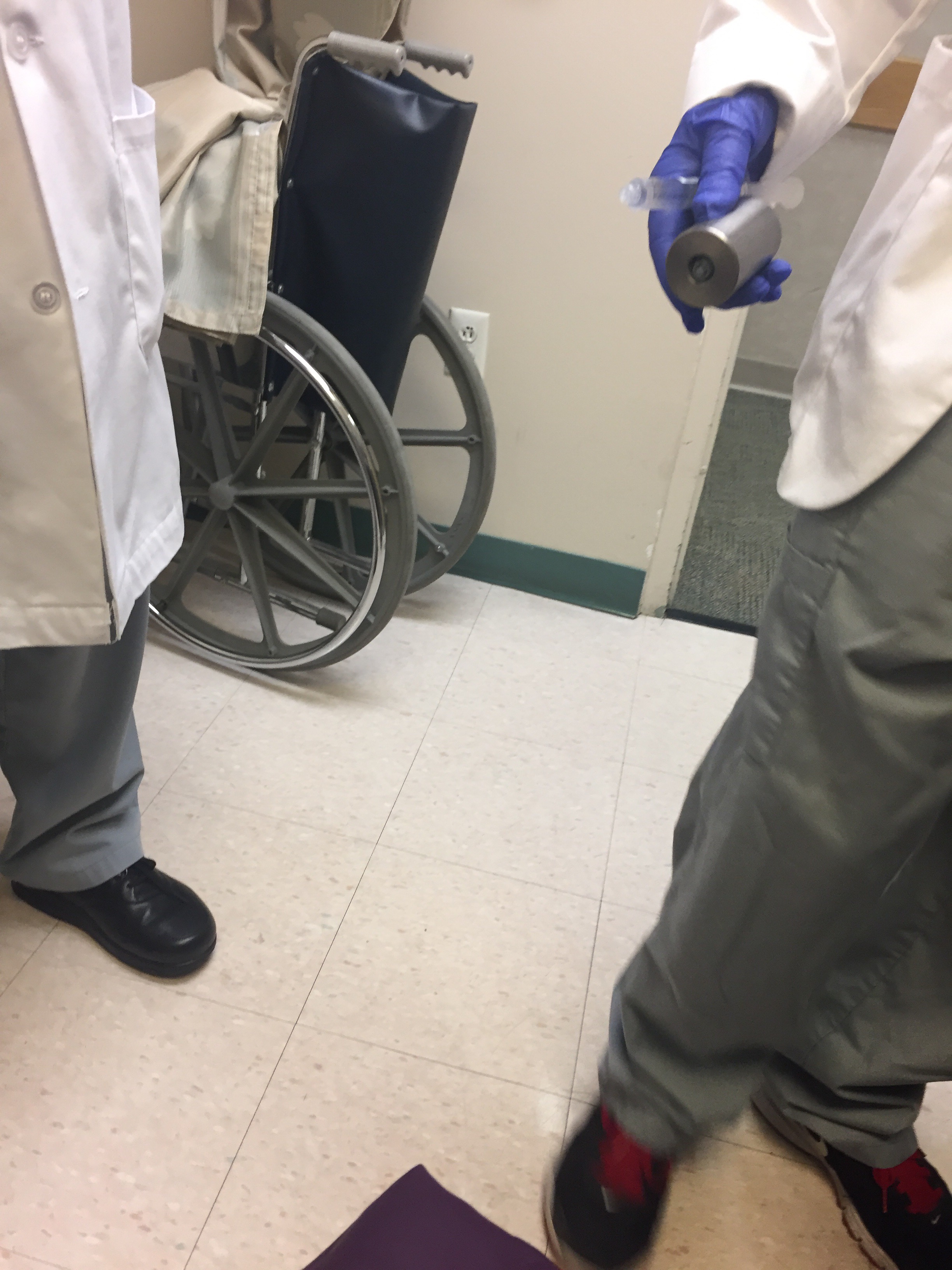
Just a little metal tube of radiation, NBD. 

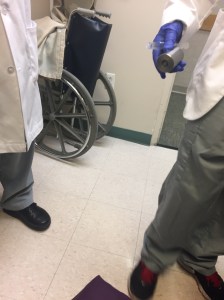
As soon as I was hooked up, two gloved doctors appeared with a thick metal tube full of radioactive liquid they injected into my veins. It wasn’t long, but it felt like fire going through my veins. They told me that’s unusual, which is becoming the story of my life. I was cautioned sometimes people can become nauseated after the injection. Fortunately, that did not happen to me.

After they emptied the tube, everyone quickly left the room and I relaxed and read as radioactivity flowed through my veins.

An hour later, someone showed up to escort me into the scan room.

As far as the actual scan, it was a piece of cake, compared to an MRI. There was plenty of room between my body and the machine.  The hardest part was lying still with my arms above my head for 45 minutes. I had them shut the lights off so I could take a little nap.

Then it was over and I was instructed to drink a lot of water to flush my system. I was pretty wiped out the rest of the day, which I’m not sure was due to the scan, the rain, the coldness, the lack of sleep, the excessive amount of walking NYC demands and/or the emotional/mental drain. Probably all those things, so we ordered in and finally emerged Tuesday and Wednesday evening for a bit of fun in the city.

If you’re interested in learning more about Gallium-68 scans, I recommend the Carcinoid Cancer Foundation website.