Nerding Out on NETs in NYC

img_3647

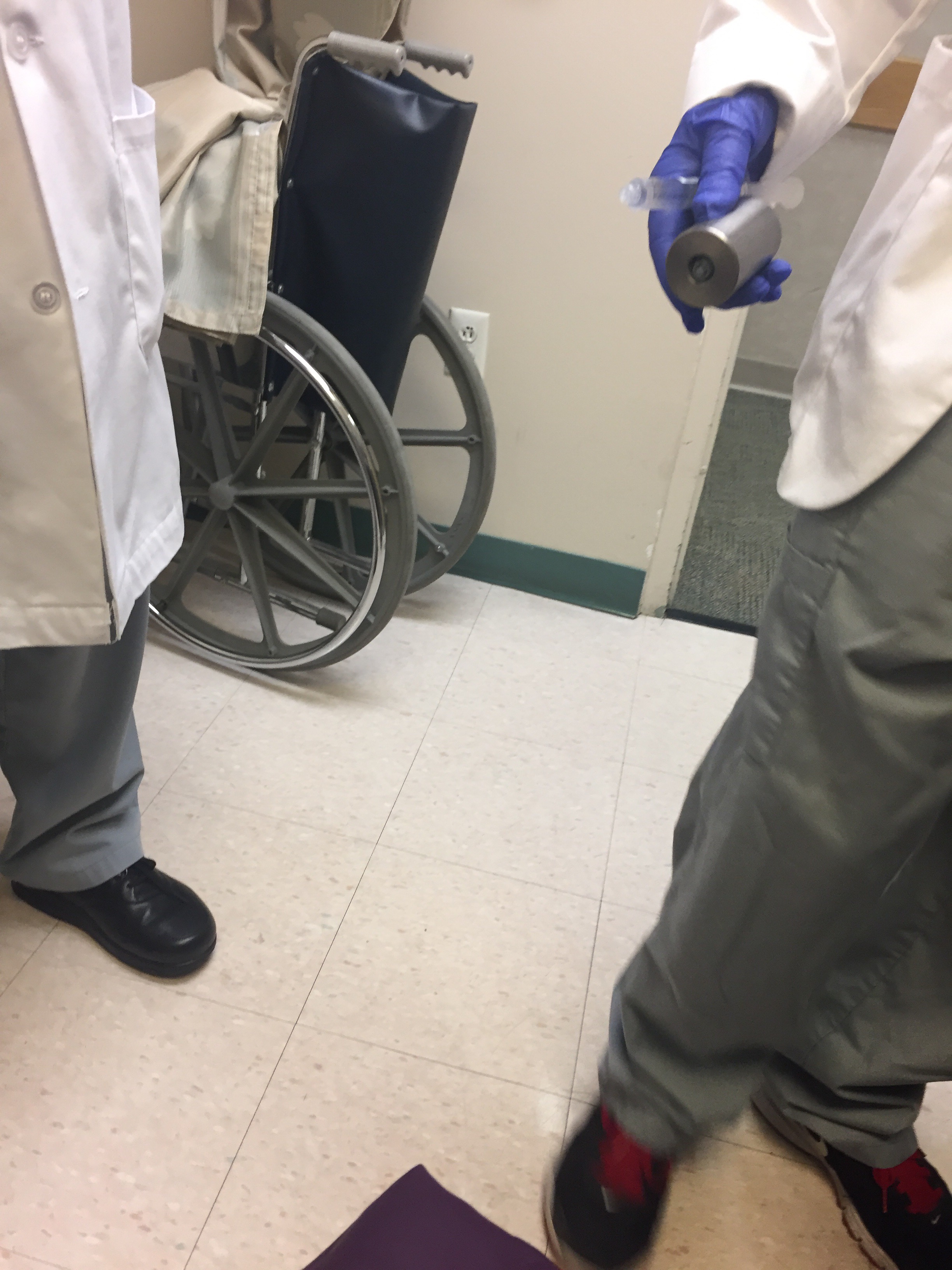
Me with the Godfather

My six month check-up with my Neuroendocrine Tumor (NET) specialist, Dr. Wolin, in New York City happened to coincide with Big Apple NETs support group Luncheon with the Experts.

As always, it was wonderful to connect with other NET survivors and hear their stories. However, being able to ask questions of some of our communities champions, was pretty incredible. The most notable of the panelists was Dr. Richard Warner, who I’m calling the Godfather of NETs. He was accompanied by two knowledgeable colleagues, Dr. Lynn Ratnor and Dr. Jerome Zacks. During lunch patients were allowed to ask general questions regarding treatments, surgery and lifestyle. Some of the major topics included:

Familial links – This was an especially timely topic for me as I just had an email conversation with a NET survivor, whose sibling also had a NET. Everything I’ve ever read indicates it is not a hereditary disease and Dr. Warner’s opinion is that there are links. He thinks this will be a hot topic in coming years as the incident rates rise for NETs. Then this week, the Healing NET released some information on a clinical trial looking for enrollees on this topic.

Diet and Alternative Treatments – The general consensus of the panelists was that these methods should not be used alone, but in conjunction with treatments. And that patients should be cautious to not negatively impact any proven treatments. Dr. Warner did share some of his opinions regarding foods (and other things) that impact carcinoid syndrome:

  • Nasal spray
  • Dental shots with epinephrine
  • Alcohol (Specifically port wine was mentioned)
  • Fermented foods such as ripe cheeses, herring, etc.

Note: I’m sure this list should be longer, but these are the items he mentioned.

There was also discussion about products such as CBD oil, alkaline water, plant based diets and excluding sugar. Being the scientists that they are, they would not stand behind anything that hasn’t been studied and proven.

Gallium-68 – There was some discussion and explaination about this newly approved scan and it’s ability to detect small tumors often undetectable by CTs and MRIs. The Carcinoid Cancer Foundation has put together a nice page of information and locations where this is available.

Xermelo – A newly approved drug to be used in conjunction with Lanreotide or Sandostatin for uncontrolled carcinoid syndrome. Read the FDA approval here.

It was a really nice few hours and I did learn some new things.

Then Monday, I had my very first Gallium-68 scan at Albert Einstein-Montefiore Cancer Center and wanted to chronicle the process for others.

Setting up the scan wasn’t too complicated. The most unnerving part was when I was told I’d have to pay upfront for the test and they would reimburse when/if my insurance covered the scan. Fortunately, my insurance came through at the last minute and I did not have to cough up $3,400. Can we all just pause for a moment and say, Thank You to the Insurance Gods.

I received several calls ahead of time cautioning me this is an extreme fast for four hours. Normally, I fast for six, so four is a walk in the park. After my Uber dropped me off at the wrong address, in the Bronx, in the rain, I eventually figured it out and made it just in time to my appointment.

I was called back right away for them to start an IV, which is always a fun process for me since I’m hard stick. Normally, the average number of sticks is four and they did it in three, so that’s pretty good.
img_3657

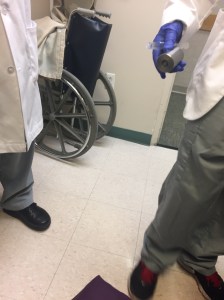
Just a little metal tube of radiation, NBD. 

As soon as I was hooked up, two gloved doctors appeared with a thick metal tube full of radioactive liquid they injected into my veins. It wasn’t long, but it felt like fire going through my veins. They told me that’s unusual, which is becoming the story of my life. I was cautioned sometimes people can become nauseated after the injection. Fortunately, that did not happen to me.

After they emptied the tube, everyone quickly left the room and I relaxed and read as radioactivity flowed through my veins.

An hour later, someone showed up to escort me into the scan room.

As far as the actual scan, it was a piece of cake, compared to an MRI. There was plenty of room between my body and the machine.  The hardest part was lying still with my arms above my head for 45 minutes. I had them shut the lights off so I could take a little nap.

Then it was over and I was instructed to drink a lot of water to flush my system. I was pretty wiped out the rest of the day, which I’m not sure was due to the scan, the rain, the coldness, the lack of sleep, the excessive amount of walking NYC demands and/or the emotional/mental drain. Probably all those things, so we ordered in and finally emerged Tuesday and Wednesday evening for a bit of fun in the city.

If you’re interested in learning more about Gallium-68 scans, I recommend the Carcinoid Cancer Foundation website.

A Day in the Life of a Cancer Patient

Last Thursday, I was driving to the Cancer Center for my monthly injection of Lanreotide and had an idea to photo document the day in the life of a cancer patient. Then I decided against it because I felt uncomfortable asking the staff for selfies of my activities and now, I regret it.

As I was leaving the hospital, I checked Twitter to see that the American Healthcare Act (AHCA) passed in the House of Representatives and I was flooded with so many emotions – fear, anger, worry, stress. Isn’t it enough I have to deal with cancer?

So, in lieu of a photo documentary, I still think there’s some value in posting the play-by-play of my day to provide a small glimpse of what illness suffers endure. However, it should be noted that in the big world of cancer, I have it pretty easy.

6:00 a.m. Rise, drink coffee, wake up, clean up.

7:00 Shower, apply lidocaine cream to port to numb the 3/4 inch needle phlebotomist will stab into my chest soon.

8:00 Out the door. What should take 20 minutes, takes 50 thanks to morning traffic.

8:50 Arrive, park and walk to the hospital.

9:00 Check-in, #1.

9:15 Check-in, #2. I confirm my address, insurance, emergency contact and complete forms, noting any new symptoms since my last visit, including a demographic section, where every month, I have to check the box indicating I am still white. I think these forms are dumb, so I stopped filling them out months ago.

9:30 Blood draw/Chest stabbing. As I’m walking into the lab, I tell the phlebotomist that my tube is the white one in the fridge. Yes, I have my own tube and section in the fridge.

9:45 Wait for the Nurse Practitioner.

10:15 A medical assistant takes me to an exam room and records my blood pressure, heart rate, weight and asks me the questions on the forms they gave me, which is another reason I stopped filling them out.*

10:45 Even though my appointment was at 10:00, the Nurse Practitioner strolls in late. She’s scheduled for patients every 15 minutes, which is completely unrealistic and why she’s late every single time. She asks me all the questions on the form I refuse to complete and confirms, “Yes, I still need the shot,” I’ve been getting every month for two years now.*  Cost of the 15 minutes – $252.

11:00 I make a side trip to the records office to get the disc from my most recent scan since I get to repeat this process with my specialist in New York City in a couple weeks. I fill out the form and tell the clerk I’ll be back in a couple hours.

11:15 Arrive at the Infusion Center, Check-in #3.

12:30 p.m. I’m called back to my infusion room. The medical assistant takes my blood pressure, heart rate and asks me the form questions…again. The nurse shows up moments later and asks me the same questions…for a third time.*

1:30 My shot finally shows up from the pharmacy but needs to sit at room temperature for 30 minutes. Cost of the shot – $18,397.20.

Somatuline_image_1

The tiny pic doesn’t do justice to the needle, but trust me, it’s muy grande.

2:00 The nurse administers the shot. It is the thickest needle any of them have ever seen and is injected into my butt-hip area. It sometimes leaves a nice lump, so we alternate left and right cheek each injection.


2:02 I’m now in line to Check-out.

2:15 Pick up the disc of my recent scan.

2:30 Arrive in my car, check Twitter to see the AHCA bill has passed the house is a step closer to reality.

2:45 Arrive at home and call my Senators.

What the daily account does not include is the conversation my husband and I had at dinner, where we re-agreed to move our lives to his home country of France if that’s what it takes to keep me alive and well. For this, I am so lucky. Most sick American’s do not have this option.

What the daily account above does not include is waking up several times Thursday night and not being able to fall back to sleep because I was worried for my well-being and the well-being of other people who will go bankrupt and/or die because of this bill.

What this daily account above does not include is the emotional and mental side effects from illness.

I could use this platform to share my specific views on the debate, but I won’t. It’s all been said and I do not have anything new to add to the debate. All I can do is share my story with my legislators in hopes that it will inspire them to do the right thing for the citizens of the country which boasts itself as the greatest on earth.

If you’re impacted by illness (and who isn’t), I encourage you to contact your Senators. Share your story. If you’re not sure where to start or what to say, I recommend https://5calls.org/#about where they provide your representative’s contact information with scripts on what to say.

*The snark is directed at the system and not the staff.  They are simply following protocols and are 110% awesome.


10 Lessons for the Newly Diagnosed

Anytime a friend or family member knows someone newly diagnosed, they get sent my way. I love this because I believe in mentorship, but I hate it because it’s a role I never wanted. Actually, I don’t think anyone wants this job.

When I connect with the referral, I often find they’re looking for words of wisdom and my reaction is, You’re coming to me? OMG! I have no idea what I’m doing. But, when I take a step back and meditate on the years since my diagnosis, I realize that I have acquired a significant amount of wisdom on navigating the maze, so below you’ll find some of my biggest lessons learned along this crazy road:

  1. Prepare for bad days. They’re inevitable. I created a list of things to do on when cancer or life gets me down. On my list: take a walk, call a friend to hang out, go to yoga or for a run, watch Jimmy Fallon Lip Sync battles, you get the idea. Doing these things doesn’t always turn a bad day good, but aides in soothing me so it’s not as torturous. But guess what, there will be good days too. Enjoy those.
  2. Choose your vocabulary. I hate being called a “cancer patient” and prefer “cancer survivor”, which I assigned to myself on diagnosis day. I also decided not to claim cancer by choosing to refer to it as “the” cancer and not “my” cancer. Sure, it’s a play on words, but words matter and have power. I often roll my eyes at cliche verbs such as fighting, battling and nouns like warrior, but I can see where others find great power in these words. This is your experience and you get to choose the words to describe what you’re going through – not prepackaged phrases or cliches.
  3. Limit your research. Yes, you read right. Google’s search results can be overwhelming. While being an informed patient is critical, there comes a point where it’s too much. Set a timer for an hour, do your Googling and then go live your life. It might even be helpful to plan your research at a specific time of day. I don’t Google in the evening. Otherwise I stay up all night thinking. I Google before something fun, so my mind does not dwell on the results for too long.
  4. Prepare to learn the meaning of friendship. There were people who showed up for me, who I considered acquaintances before illness. They were people who called, texted, sent me cards, cooked me dinners and took me to appointments. Words cannot express my gratitude for these angels and I would go to the ends of the earth on their behalf, as they did for me.There were also friends I considered close, who went missing in action. I’d be lying if I said it didn’t hurt. I understand – cancer is uncomfortable and not fun, but I now know the true meaning of friendship.
  5. Think about what you will do on the other side. I can not accept that we are given these obstacles for no reason. I think it’s important to discover meaning or the lesson in a traumatic experience. Do you want to help others affected by the disease? Awesome. Or do you want to erase the experience from your memory? Totally understandable. Whatever category you fall into, do something! Take the trip you’ve been talking about for years. Write the book. Run the marathon. Jump out of the plane. Make amends with the family member. If cancer teaches us anything, it’s that there are no guarantees, so minimize your chances of regret.
  6. Get a therapist. Your doctor is leading the team on physical healing, but you can not ignore the mental, emotional and spiritual aspects. Cancer is a torturous mental challenge and having an outside opinion has been instrumental to me. Ignore this and you’ll miss important aspects of healing. Plus, it’s sometimes difficult to talk to those so close to you about big fears that accompany the disease since they themselves are so emotionally invested in you.
  7. Find a support group. It does not have to be traditional. It just has to work for you. I still have never been to one where you sit in a circle and cry, but I have met countless lifelong friends through a weekly writers workshop and a young survivors non-profit. I also participate in an online group of people with the same disease. It’s here where I found my specialist and often research treatments. I always thought of support groups as therapy, but they can also be a wealth of information.
  8. See a leader. No one will hold your best interests at the top of their mind the way you do and having the right doctor is game changing. Life saving, in fact. Don’t settle on the first doctor who crosses your path. Visit at least two or three. More if your case is rare. Find someone who’s doing research on your disease and not someone who’s following the pack. It took me several opinions to find a specialist who knew what to do with a one in 10 million diagnosis, but once I found him, my world changed. He disagreed with all the previous opinions and I know I am alive today because of his experience. I travel from Nashville to New York City to see him every six months and often look forward to hearing the research in his pipeline.
  9. Be relentless. It is exhausting and the only time I’ll ever refer to disease as a fight is in reference to navigating the medical maze. My doctors call me relentless and I take it as a compliment. I do not leave them alone (respectfully) and because of this, they return my call or email quick.
  10. Practice gratitude. It wouldn’t be a post from me, if I didn’t mention gratitude at least once. There will be days it will be hard to be grateful for anything, but believe me when I say, there is always something to be grateful for, even if it’s being alive, which is a privilege denied to many. Write these down. Re-read them when times are tough.

I’ve also learned these lessons are constantly shifting, evolving and revealing themselves. Cancer survivorship is a process and I am a grateful participant.  I wish the same for you.

Read my other Cure articles here.